






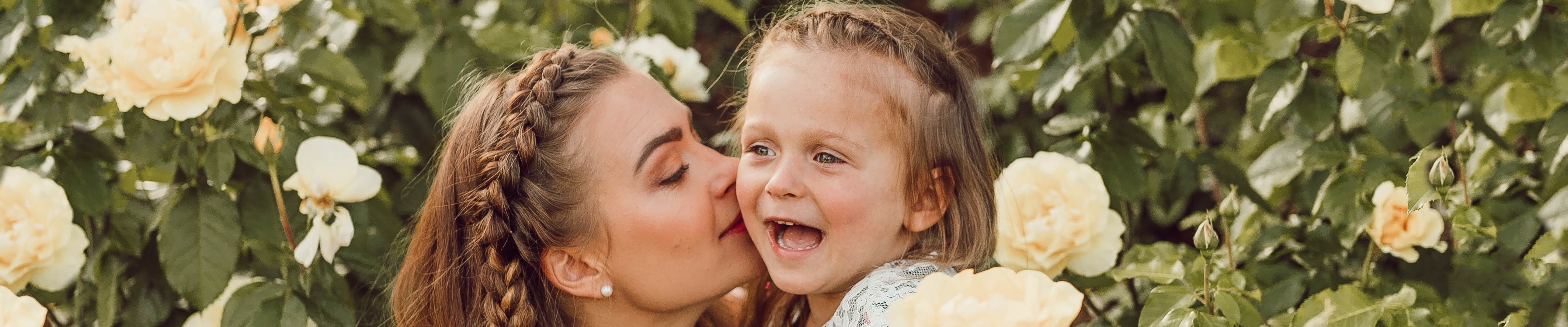
You might call her Mom, Mommy, Mama, Ma or Mother. Sometimes, she’s Mum.
So many names for the woman who plays so many roles in our life. Among other things, Mom is a caregiver, teacher, assistant, playmate, nurse, disciplinarian, chef, housekeeper, bookkeeper, chauffeur and cheerleader.
What is the History of Mother’s Day?
How did Mother’s Day begin?
While ancient cultures honored mother goddesses, the concept of a Mother’s Day holiday is more recent.
The American holiday we know as Mother’s Day has its roots in the efforts of three remarkable women of the late 19th and early 20th centuries.
The Community Activitist
Ann Reeves Jarvis was a West Virginia woman who helped start “Mother’s Day Work Clubs” out of concern for the health and welfare of mothers and children in Appalachia. In 1868, she organized “Mother’s Friendship Day” to help heal the rifts caused by the Civil War.
She is supposed to have once closed a church school lesson by saying: “I hope that someone, sometime will found a memorial mothers day commemorating her for the matchless service she renders to humanity in every field of life. She is entitled to it."
The Suffragist
Julia Ward Howe, known for her political activism in support of women’s voting rights, was a poet and the author of “The Battle Hymn of the Republic,” a stirring Civil War rallying anthem. While it may seem contradictory, she also has a connection to Mother’s Day. Her 1870 “Mother’s Day Proclamation of Peace” called on mothers to unite in an effort to eliminate war.
The Daughter
Community activist Ann Reeves Jarvis died in 1905, on the second Sunday in May. Recalling her mother’s wish for a day to recognize mothers, her daughter Anna Jarvis began an all-out campaign for Americans to set aside a day to honor the sacrifices mothers make for their children. She envisioned a quiet family celebration that honored motherhood through good deeds and kind gestures.
On the anniversary of her mother’s death in May 1908, Jarvis held a tribute at a Methodist Church in her hometown of Grafton, West Virginia. The Mother’s Day celebration was repeated the following year.
Simultaneously, Jarvis’ friend, retailer John Wanamaker, held Mother’s Day events that drew thousands to his Philadelphia department store.
These successes bolstered support for an annual, nationwide Mother’s Day.
When is Mother's Day?
In 1914, President Woodrow Wilson signed a bill establishing Mother’s Day as a holiday. He declared that Mother’s Day should occur annually on the second Sunday in May, following the custom begun by Anna Jarvis.

What are Some Mother’s Day Traditions?
Americans often recognize mom with cards, flowers and Mother’s Day gifts. However, the commercial perception of the ideal gifts for mom may not match the reality, according to one survey.
Prior to Mother’s Day, consumers are bombarded by ads for everything from candy and jewelry to perfume and spa treatments. However, a 2024 You.gov poll found that most moms want something much simpler. The top gift choice, preferred by 60% of mothers, was to “spend time with their children.” About 31% of moms also wanted to “spend time with my mother.”
This might include going out to eat or drink with the family, a choice favored by 42% of respondents. Flowers were the gift of choice for 31% of mothers. Only 17% hoped for jewelry and a meager 11% wanted beauty products, cosmetics or clothing.
Many respondents desired a special meal, which aligns with a traditional image of children making mom breakfast in bed. Going out for Mothers Day brunch or dinner is another popular Mother’s Day custom.
What Countries Celebrate Mother’s Day?
The Mother’s Day holiday is not unique to the United States. Many other countries have celebrations honoring mothers, although not all of them occur in May.
Since the 1600s, England has celebrated “Mothering Sunday,” a floating holiday that occurs on the fourth Sunday in Lent. The rest of the United Kingdom also celebrates a Lenten-season Mothering Sunday. However, Australia, New Zealand and Canada celebrate Mother’s Day on the second Sunday in May.
Mother’s Day is always celebrated on May 10 in Mexico. Mothers receive flowers, cards and gifts. Traditional music and food are often an integral part of the day.
Mother’s Day in Japan is marked with the typical cards and gifts. Sometimes, children present red carnations to their mothers, a symbol of a mother’s love and sacrifices. Japanese families might eat traditional egg dishes to celebrate the day.
Food is central to Mother’s Day celebrations in Ethiopia, which occur after the rainy season ends in the fall. The family enjoys singing, dancing and a feast. Typically, mom cooks a hash made from meat brought by her sons and vegetables and spices contributed by her daughters.
In India, Hindus honor Durga, the goddess of mothers, during a 10-day festival in October.
Happy Mothers Day!
Whether she’s the woman who gave birth to us or someone who influenced our life later, the person we call “mom” typically holds a special place in our hearts.
Take time this Mother’s Day to recognize the love and care mom devoted to raising you and shaping you into the person you are today.