








How St. Nicholas Became Santa Claus
The growth of Christianity spread stories of the early saints throughout Europe. One popular saint’s day celebrated in Germanic countries was the feast of St. Nicholas on December 6.
Dutch and German immigrants eventually brought their Christmas customs to America, including those surrounding St. Nicholas. Through art and story, these traditions became part of the American experience.
Two 19th century men, in particular, established some of the most enduring features of the Santa Claus legend: Clement Clark Moore, author of “A Visit from St. Nicholas,” and cartoonist Thomas Nast.
Among other things, Moore gave Santa his sleigh and flying reindeer. However, Nast might be the first to document Santa’s famous residence. Tucked into the border of an illustration published in the December 29, 1866, edition of Harper’s Weekly magazine is an address: “Santa Claussville, N.P.”
According to the New York Times, the abbreviation for North Pole indicates that the public was already familiar with the link between the Arctic and Kris Kringle.
Why the North Pole?
Though St. Nicholas’ origins are Turkish, it was Northern Europeans who kept his legend alive. Gradually, Santa’s image adapted to snowier regions and his eventual link to reindeer connected him to the Arctic.
People living in the 19th century understood the North Pole was icy and remote, uncharted and virtually unreachable. Not until the early 1900s would explorers successfully venture to the top of the world. The mysterious Arctic with its never-ending winter seemed just the place for a secret, magical workshop.

Is There More than One North Pole?
Geographically, Earth has two magnetic poles, one at its southern tip and the other at its northern tip, so there is only one North Pole.
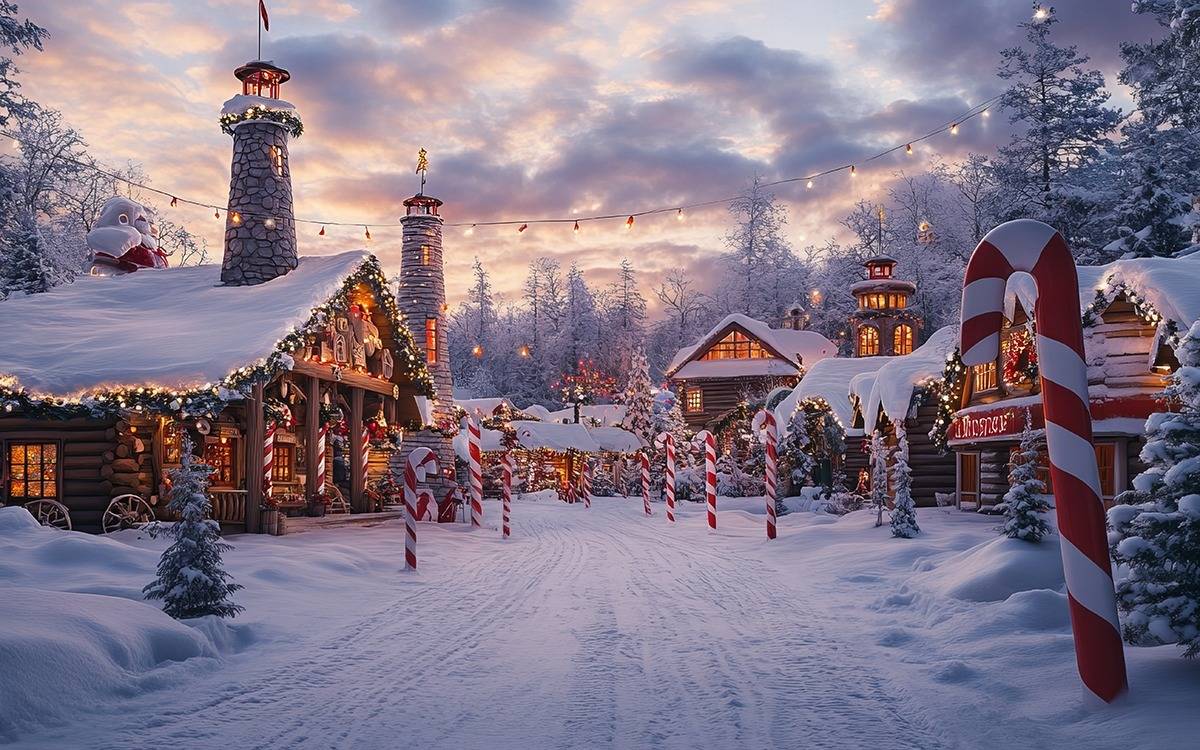
However, people can visit several North Pole Christmas villages and theme parks to experience what Santa’s magical home might be like.
Possibly the oldest Christmas village theme park is in North Pole, New York, near Lake Placid. Other well-known North Pole locations include North Pole, Colorado; North Pole, Alaska, Muskoka, Ontario, Canada, and Rovaniemi, Finland.
Does Santa Ever Leave the North Pole?
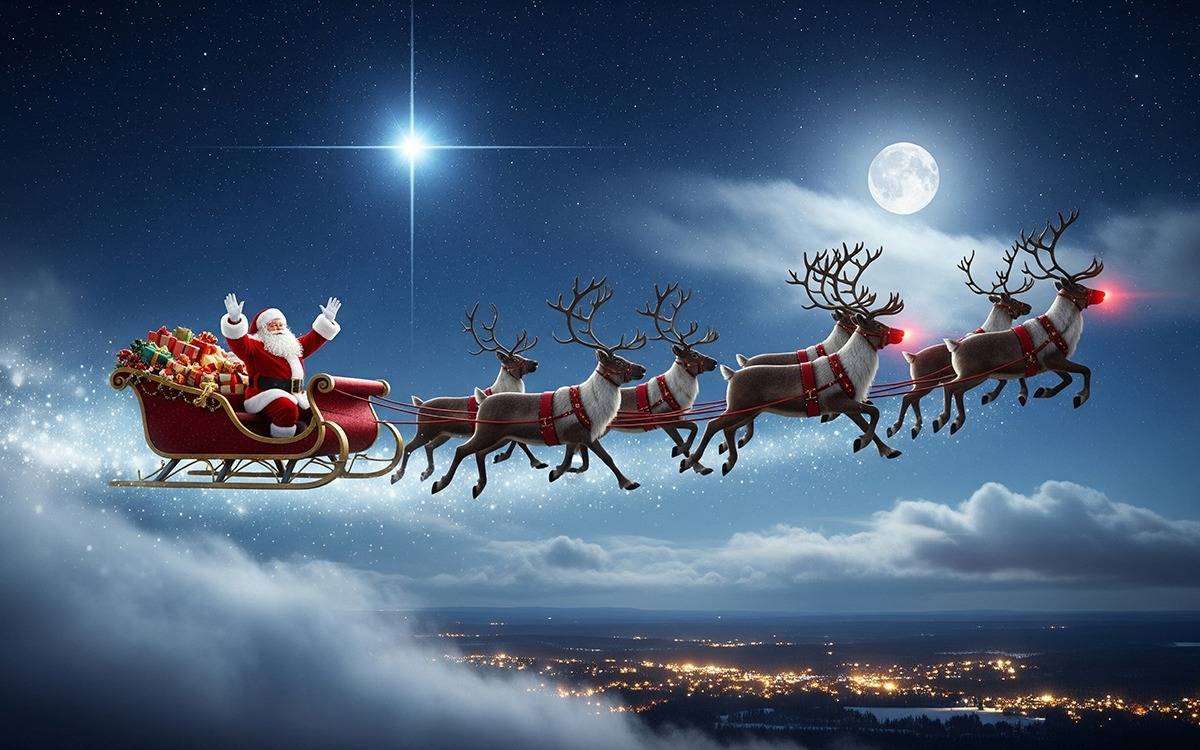
According to legend, Santa leaves the North Pole just once a year. On Christmas Eve, he loads his sleigh, hitches up his reindeer and flies around the world to deliver gifts to good children everywhere.
While no one knows how he manages this in one night, his trip around the world has been “documented” for decades.
In 1955, a mistaken phone number printed in a newspaper advertisement caused a child hoping to reach Santa to contact the Continental Air Defense Command instead. The quick-thinking and kind-hearted commander in charge sparked a tradition that persists to this day. Every year on Christmas Eve, NORAD (North American Aerospace Defense Command) tracks Santa’s ride through the sky. Updates on Santa’s location are provided throughout Christmas Eve in English and many other languages.
As one of the North Pole’s nearest neighbors, the Canadian Air Force does its part to help Santa along the way by escorting his sleigh through Canadian air space.
Curious Facts About the North Pole
While you may know a lot about Santa’s workshop, here are a few things you might not have known about the North Pole:
There is no land at the North Pole. The “pole” exists on a six to 10-foot-thick ice cap floating on top of the Arctic Ocean.
Because all longitudinal lines, and therefore all time zones, converge at the North Pole, it theoretically exists in all the time zones at once, or in no time zone at all.
The North Pole only experiences one sunrise and one sunset per year, spending about six months in complete daylight and six months in total darkness.
Over the years, countless books and movies have depicted Santa’s wintry home. Even if we can’t visit his secret North Pole workshop, it surely exists in the hearts of Christmas enthusiasts everywhere.