






From Great Baths to Great Backyards: The Story of the Swimming Pool
Posted by Linda Trzyna on Jun 11th 2026
If you’re a swimmer, propelling yourself across the water may seem second nature. However, unlike most mammals, swimming does not come naturally to humans. In fact, our body structure is more suited to drowning than swimming!
Remember, someone had to teach you how to swim and it took a lot of practice to learn to swim well.
When Did People First Learn to Swim?
Anthropologists believe the first swimmers took to the water in search of food, learning to fish, and to dive for clams. The ear bones of Neanderthals living 100,000 years ago show evidence of swimmer’s ear.
Egypt’s Cave of Swimmers includes man-made images that many experts believe show men swimming. Amazingly, the cave sits in the Sahara Desert, which 6,000 to 9,000 years ago was a lush environment with lakes and rivers.
According to The New York Times. “The earliest known records of swimming…show Assyrian soldiers of the ninth century B.C. swimming a stream with the aid of inflated animal bladders” – quite possibly the first inflatable flotation devices!
Fast forward a few thousand years to ancient Pakistan circa 2500 BCE and The Great Bath, the first known man-made swimming pool.
We know from their literature and art that ancient Greeks could swim. Swimming was also an important skill for Greek warriors. Several times, swimmers saved the day during Greek military confrontations.
Who Invented the Swimming Pool?
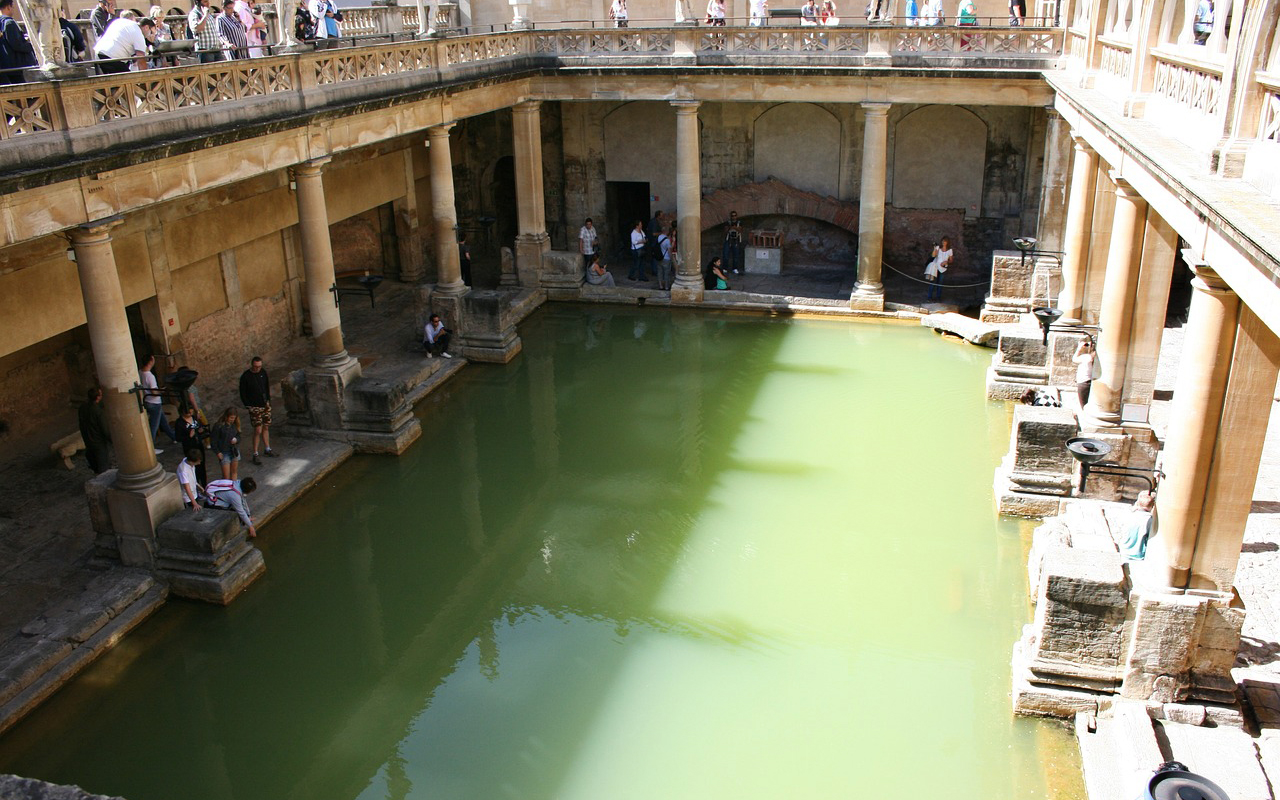
In addition to ocean swimming, the ancient Greeks also swore by their bathing pools, which were hygienic, not recreational. The Romans, too, commonly practiced public bathing. In fact, Roman diplomat Gaius Maecenas is credited with installing the first heated pool about 100 AD.
When the Roman Empire fell, public baths were gradually abandoned. This was partly due to the cost and lack of technical expertise required to maintain the aqueducts and other infrastructure that kept the baths filled, as well as social, religious and even environmental reasons.
You may also like:



The Rise of Modern Swimming Pools
Swimming pools started coming back into style in early 19th Century Great Britain. After six public pools were built in London in 1837, people began to consider swimming as a form of recreation.
The Cabot Street Bath, opened in 1868, in Boston, Massachusetts, was the first public pool in the U.S. The facility consisted of two indoor pools, one for men and one for women, created mainly to promote good hygiene among poor working class residents.
The first modern Olympic games, held in Athens, Greece, in 1896, featured four swimming events. Lacking money to build a pool, the events were held in the ocean.
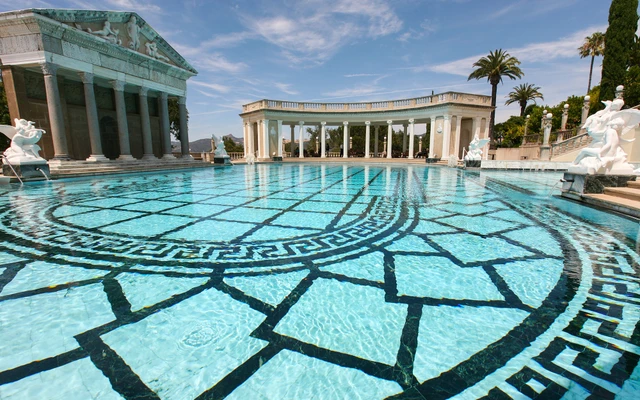
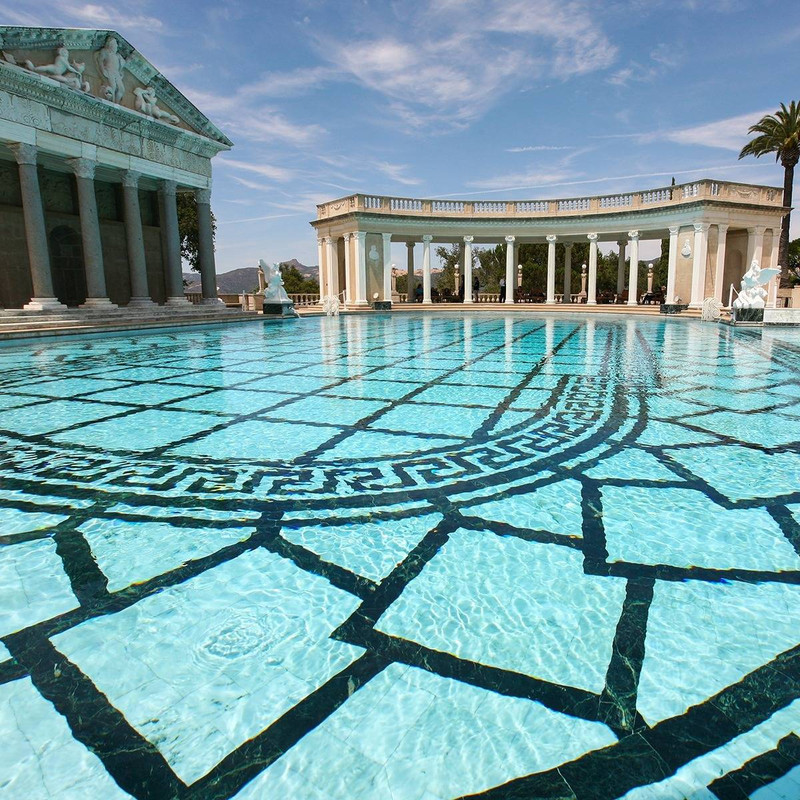
Swimming pools entered a golden age in the 1920s, when they were introduced at various resort hotels. Some of the most glamorous private pools were also built during this era, such as the Neptune Pool at Hearst Castle and the Vanderbilts’ 70,000 gallon heated indoor swimming pool at the Biltmore Estate.
Other notable swimming pools of the time include the Richmond Municipal Natatorium (Richmond Plunge) and Berkeley City Club, in California, and the Waikiki Memorial Natatorium, built in 1927 to honor veterans of WWI.
By the 1940s, Hollywood stars like Esther Williams and Johnny Weissmuller had made swimming glamorous and Americans began to yearn for swimming pools of their own.
The dream became more attainable and more affordable with the introduction of above ground pools framed in steel and aluminum. Over the years, continual improvements in construction and water circulation made backyard swimming pools common across the U.S.

How Popular is Swimming?
The interest in both residential and commercial swimming pools continues to climb, with the swimming pool installation market expected to grow more than 2% per year, through 2030.
Swimming and diving competitions are common in high schools and colleges across the U.S. USA Swimming, the national governing body for the sport of swimming in the United States, boasts 2,800-plus clubs with more than 400,000 members.
In addition, the Red Cross provides swim training for more than two million people each year. Swimming is the fourth most popular recreational sport in the U.S. and the most popular recreational activity among children and teens age 7 to 17.
Swimming is strongly represented at the Summer Olympics, which features 37 swimming events and several additional water sports, including synchronized swimming and water polo.
People swim for exercise, relaxation, stress relief and physical therapy. Pools are good business, too: Swimming pools are immensely popular at health clubs and hotels. Clearly, the sport of swimming has expanded well beyond the ancient practice of public bathing.
So, the next time you’re enjoying a refreshing dip, take a minute to ponder the long history of the swimming pool!
Christmas Central Answers Your Swimming Pool Questions
How popular are swimming pools?
Today, there are about 10.7 million residential swimming pools and 309,000 public swimming pools in the United States, according to Pool Research.
The states of Florida and California contain the most swimming pools. However, while there is one swimming pool for every 29 California residents, Florida has a pool for every 14 residents and Arizona boasts a swimming pool for every 13 residents!
How much does an inground pool cost?
Pool costs vary by size, construction and geographic location. Forbes notes the average cost of an inground pool in the U.S. is about $35,000.
Vinyl pools tend to be the most affordable. Fiberglass pools are more expensive, and concrete pools are typically the most costly to install.
Obviously, the price of any inground pool increases when you add extras like a hot tub, pool lighting and landscaping.

Get updates on the latest sales and featured items by subscribing to our newsletter below. New subscribers receive 10% off their first order!

Need help with decorating tips? Choosing the right tree?
Christmas Central Resources