







Regards! Best wishes! Felicitations!
Whichever way you say it, people have extended written greetings across distances for thousands of years.
The Egyptians sent salutations written on papyrus, while the Chinese wrote wishes for good fortune in the New Year on the paper they invented. However, most of these exchanges were sent as letters, not the greeting cards we are familiar with today.
The modern greeting card has its roots in Europe in the 1400s, as paper became more available. Cards were produced individually by hand, with verses in fancy calligraphy that might be accompanied by ink drawings or embellished with bits of lace.
The printing press, invented in 1440, made it possible to quickly create multiple copies of artwork and text. The Germans mass-produced greeting cards for New Year’s and Valentine’s Day.
The first Christmas card, however, wouldn’t be sent for another 400 years.
Who Invented the Christmas Card?
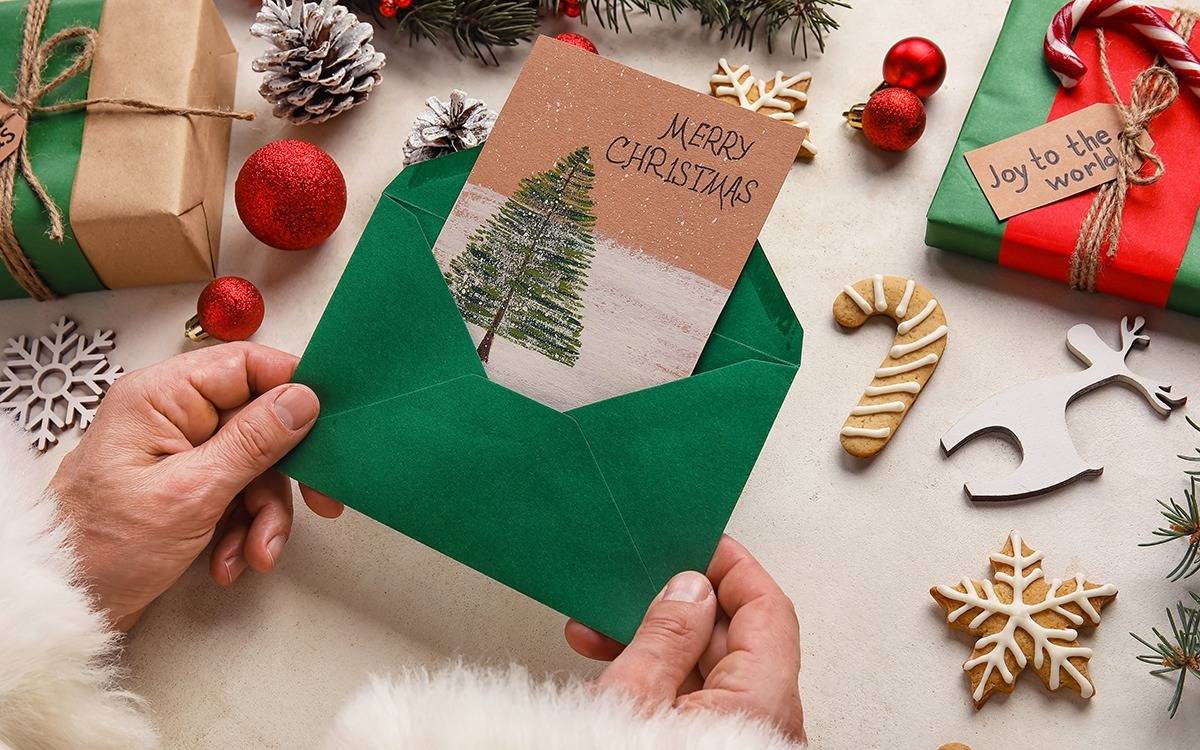
In Victorian England, people commonly sent holiday letters to friends and family to tell them how the year had gone. Those who received a letter were expected to respond with one of their own.
This tradition became easier and more affordable when Sir Henry Cole helped set up the Penny Post – but it also created a dilemma. In 1843, as Christmas drew near, Cole realized he had received much more correspondence than he could hope to answer.
Instead, he asked an artist friend, John Callcott Horsley, to illustrate a card of his family celebrating the holiday and conducting charitable works. The card could easily be personalized with a brief, hand-written message.
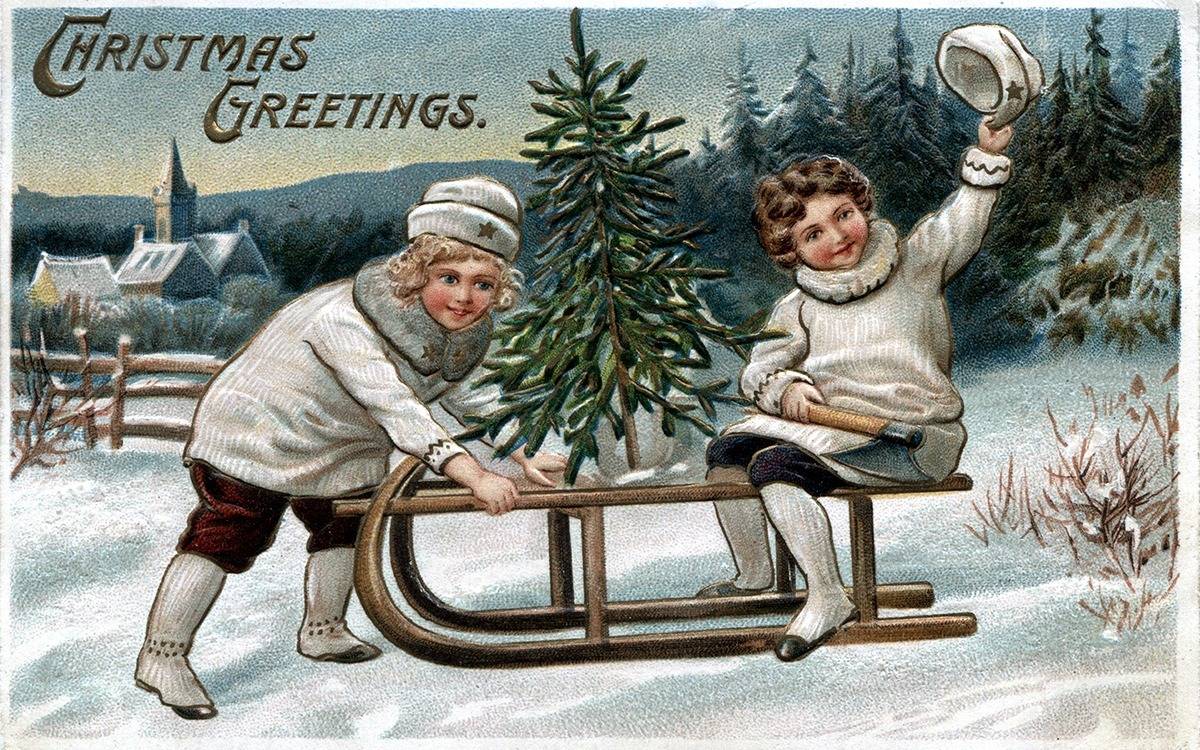
The popularity of such cards grew, especially with the introduction of new printing techniques. Christmas card designs were also influenced by the Valentine cards that were already popular at the time, which featured “paper lace” and painted illustrations.
In fact, many of the images we associate with the holiday season originated with Christmas cards, including holly, evergreens, wintry scenes and country landscapes.
The Evolution of the Christmas Card
Louis Prang, a lithographer who earned a reputation for producing high-quality color reproductions of major artworks, is sometimes called “the father of the American Christmas card.” In the mid-1870s, his company began printing and selling colorful, stylized Christmas cards, an enterprise that proved highly successful.
Throughout this time, Christmas cards resembled a one-sided postcard. It wasn’t until around 1915, when brothers Joyce and Rollie Hall formed Hall Brothers, that Christmas cards took the form we’re more familiar with today. The company that eventually became Hallmark introduced folded cards that were mailed in envelopes for privacy.
As printing techniques continued to improve, so did sales of Christmas cards.
The computer age changed the custom of sending Christmas cards. By the 1990s, new electronic cards, or e-cards, tantalized card-senders with the thought of dispatching their holiday correspondence to everyone on their Christmas card list in seconds via email, saving time and postage (just 32 cents in 1998).
The fact that the paperless process “saved trees” was also appealing. Plus, unlike physical cards, digital cards were multi-sensory delights that might include music and animated images such as twinkling lights, falling snow and moving pictures.

Christmas Cards in the Digital Age
Thirty or so years later, many people send digital holiday greetings, but a significant number of consumers continue to prefer physical Christmas cards. According to industry experts, those who do send physical Christmas cards, particularly Millennial and Gen Z customers, will often spend more on unique or premium designs.
In an effort to make their cards stand out, they may choose high-end printing options like embossing or foil-stamping, a combination of shiny and matte finishes, laser-cut designs, fluted or ragged edges or premium paper stocks. Personalized cards are also quite popular, from photo cards to printed signatures.
Do People Still Send Christmas Cards?
While some might consider it a quaint custom left over from the pre-digital age, millions of Christmas cards are sent yearly, although not in the numbers once seen.
Compared to an average of 2.3 billion Christmas cards sent annually during the 1990s, about 1.3 billion cards were mailed during the last holiday season. However, that quantity is well above the number of cards sent for Valentine’s Day, Easter, Mother’s Day, Father’s Day and other holidays combined.
Meanwhile, the expense of purchasing and mailing printed Christmas cards continues to rise. In fact, by Christmas 2026, the price of a postage stamp will have increased to 82 cents. These higher costs have prompted many to trim their Christmas card list or find other ways to reach out to friends and family.
Still, the tradition of sending Christmas cards persists because of the personal connection it represents. Whether or not we will see the recipients at Christmastime, we want them to know we are thinking about them during the holidays.
Whether it’s sent through a printed or electronic card, a text, a chat or private message, maintaining ties with those who mean the most to us seems most meaningful during the holidays.
Christmas cards may evolve with the times, but sentiments like hope, good tidings, joy and blessings are timeless messages that will always transcend their physical form.
headline and link