






4 Essential Pool Water Treatment Products and How to Use Them
Apr 7th 2026

To keep your pool water clean, clear and safe, most pool water maintenance routines rely on four core products:
Each plays a specific role but using them correctly and consistently is key.Pool Clarifiers
If your pool water looks cloudy but your chemical levels are otherwise balanced, a pool clarifier can help. Clarifiers gather tiny particles that are too small for your filter to catch, clumping them together so they can be removed more easily.
They’re typically used on an as-needed basis rather than as part of your regular schedule.
Clarifiers improve appearance but they don’t sanitize or balance your water.

Pool Water Balancers
Pool water balance refers to the pH level of the water. If your pool pH is too high, your chlorine might not clean the water effectively. When pool pH is too low, swimmers can experience eye and skin irritation. Pool water balancers keep the pH level steady for a cleaner and more comfortable swim.
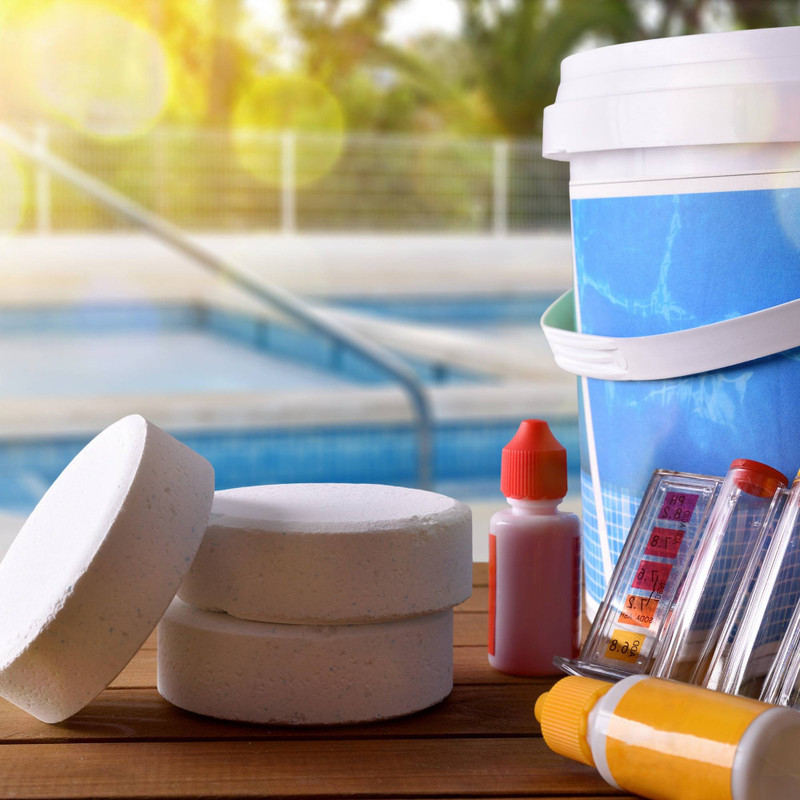
Before adding most other pool chemicals, it’s important to make sure your water has the proper pH balance, ideally between 7.2 and 7.6. This means using a pool chemical test kit and making the proper adjustments.
Your testing kit will also provide information on total alkalinity, which helps keep pH stable, and calcium hardness to prevent equipment corrosion or scaling.
Balanced water allows chlorine and pool shock to work more effectively and helps prevent damage to your pool surfaces and equipment. A good rule of thumb is to test your water at least once or twice a week during peak season.
Pool Shock
Pool shock is essentially a high-powered sanitizer used to “reset” your water. It quickly eliminates bacteria, organic contaminants and algae that regular chlorine levels may not fully handle.
A common question is: How often should you shock your pool? That could depend on the weather and how often the pool has been used.
For instance, experts typically recommend shocking your pool:
About once a week during heavy use
After storms or heavy rain
When water becomes cloudy or develops a strong odor
For best results, add pool shock treatment in the evening and let it circulate overnight before swimming.
You may also like:


Chlorine or Bromine
Chlorine is the backbone of most swimming pool maintenance routines. It works continuously to sanitize your water, killing bacteria and preventing algae growth. Bromine offers a similar function and is often used in hot tubs.
Unlike pool shock, which is used periodically, it’s important to keep chlorine levels consistent. This is usually done with pool chlorine tablets, granules or a chlorinator system.
One of the most common mistakes is over-chlorinating. More isn’t better; too much chlorine can cause skin and eye irritation and even reduce its effectiveness.
Regular pool chemical testing helps you stay in the ideal range.

How These Pool Chemicals Work Together
Rather than thinking of these products separately, consider them as a system. Pool chemicals aren’t meant to work in isolation – they’re designed to support one another in maintaining balanced, healthy water.
When you break it down into a simple routine, this system becomes much easier to manage day to day:
Test your water
Adjust with pool water balancers
Maintain sanitizer levels with chlorine
Shock weekly or as needed
Use clarifier for occasional cloudiness
This way, each product builds on the last. The result is more efficient chemical use, fewer water issues and a pool that stays consistently clean and clear.
Overall Pool Maintenance
While these four essentials cover the basics, you may occasionally need specialty swimming pool chemicals like algaecides or stain removers to address specific problems.
The most important thing to remember about maintaining the condition of your swimming pool water is that consistency matters more than complexity. Regular testing, proper timing and using the right products in the right order will keep your water clean, clear and ready to enjoy.
With a better understanding of how your pool chemicals work, and when to use them, you can spend less time troubleshooting and more time enjoying your pool!
Christmas Central Answers Your Pool-Related Questions
How do you shock a pool?
Pool shock is a chemical treatment high in chlorine that is used to kill bacteria in swimming pool water.
Lots of things can throw off the balance of your pool water: Heavy rain, heavy use or the presence of impurities like sunscreen and dirt. When the balance is off, the water may get cloudy and smelly. You may notice algae forming. Your pool water might even turn green.
As a precaution, pool experts recommend shocking your pool water weekly, as well as after a pool party or summer storm.
Prepare to shock your pool by testing the pH of the pool water and balancing it if necessary.
The amount of shock you need depends on the size of the pool and the type of shock you use. Whether your shock is liquid or granular, always wear gloves and eye protection.
Follow the manufacturer’s instructions to determine how much shock to use.
Keep the pool pump running during treatment and for up to eight hours afterward.
Test the chlorine levels afterward as more shock may be needed.
Get updates on the latest sales and featured items by subscribing to our newsletter below. New subscribers receive 10% off their first order!

Need help with decorating tips? Choosing the right tree?
Christmas Central Resources