






Silk & Style: Beautiful Wedding Florals that Won't Break the Bank
May 14th 2025

If you’ve recently become engaged, you may already know the first rule of wedding planning: Set a budget. A wedding is an expensive endeavor. You want your special day to be flawless – but perfection often comes at a cost.

How Much Do Wedding Flowers Cost?
According to The Knot, an online wedding registry and planning service, couples spent an average of $2,723 on their wedding flowers last year. Florists generally recommend setting aside anywhere from 7% to 15% of your total budget for wedding floral arrangements.
As wedding costs rise, however, people looking for ways to control expenses are exploring options that never would have been considered even a few years ago. One of those options involves fake flowers.
Couples who choose artificial wedding flowers note that there are many realistic versions available at significantly lower prices than fresh florals. While cost may be the main reason to opt for silk flowers, it isn’t the only one.
There are some compelling reasons to consider using artificial flowers.

Why Use Faux Wedding Flowers?
Availability
To meet demand for fresh flowers that are not in season locally, florists obtain blooms from across the country and around the world. Chances are, many of the flowers in your bouquet come from far away, which adds significantly to the cost.
Conversely, silk flowers are easily obtained and always in season. Tulips in July? No problem. Peonies in December? Easy-peasy.
Virtually any flower or foliage you want for your wedding is available artificially. That means you can create the romantic floral setting you’ve always imagined without worrying about weather, season or supply.

Creativity
A resourceful way to stretch your wedding flower budget is to combine real and silk blooms. Mixing fresh and faux allows for numerous possibilities:
Create a bridal bouquet of fresh flowers, but use silk flowers for your bridal party.
Combine fresh foliage and fillers with real-looking artificial flowers.
Accent your favorite fresh flowers with lush artificial blossoms.
Some experts say the key to combining fresh and silk flowers is choosing realistic faux flowers in a natural palette. Other floral artists point out that silk flowers allow you to use your favorite flower in your theme color, even if that shade can’t be found in nature.
Either way, faux flowers enable you to play with color and style. You can even create your wedding florals weeks in advance – a bonus for DIY wedding planners.
Fresh or faux, Brides wedding publication says to focus your funds on the flowers with the biggest impact – the florals that will receive close-ups from the photographer or guests.
Durability
If you’re envisioning a beautifully decorated wedding arch or lavish photo wall, remember that fresh flowers are heavy. This can make elaborate floral displays tricky to create and transport.
On the other hand, faux flowers are lightweight and resilient. They withstand tugging and tweaking without breaking. Lighter, more durable silk floral arrangements will more easily weather the trip to the ceremony site and wedding venue, note the experts at Wedding File.
Plus, unlike fresh flowers, your silk wedding flowers won’t wilt, turn brown or drop petals before the cocktails are served.
Allergy-Friendly
No one wants to walk down the aisle with watery eyes and an itchy nose. Silk flowers save the day, since they’re allergy-free! You can carry a beautiful bouquet and spread blooms around your wedding venue to your heart’s content without popping allergy pills or stifling a single sniffle.
The fragrance of real flowers can add to the romance of your day, but if allergies are an issue, couples may want to consider the comfort and assurance of using artificial flowers. Plus, with silk flowers, you eliminate the possibility of staining your wedding attire with pollen from your wedding bouquet.
In addition, you can safely use whatever silk flower variety you want to decorate your wedding cake, without worrying about toxicity or pesticides.
Convenience
Fresh wedding flowers are arranged mere hours before your big event and may not even last through the day.
Conversely, you can purchase artificial flowers well in advance of your wedding day. You can take your time creating bouquets, boutonnieres and other florals – even play around with combinations to design the perfect arrangement.
Silk flowers aren’t thrown away after your wedding, either, and there’s no added expense to preserve them. You can display your bouquet in a vase or create separate arrangements for different parts of your home. Your flowers can even be passed along to other soon-to-be weds!
Affordability
Depending on the type of flower and the quality of the product, faux flowers are budget-friendly.
The cost of fresh wedding flowers can vary widely, depending on the florist and your location. However, judging by several regional and national sources, you may expect to pay a minimum of $200 for a fresh floral bouquet and an average of $75 per bouquet for each attendant. Elaborate arrangements of fresh flowers could require professional installation, which will further increase costs.
You may have to spend more to obtain highly realistic premium silks, but even lifelike fake flowers can cost less than their fresh counterparts.
Realistic
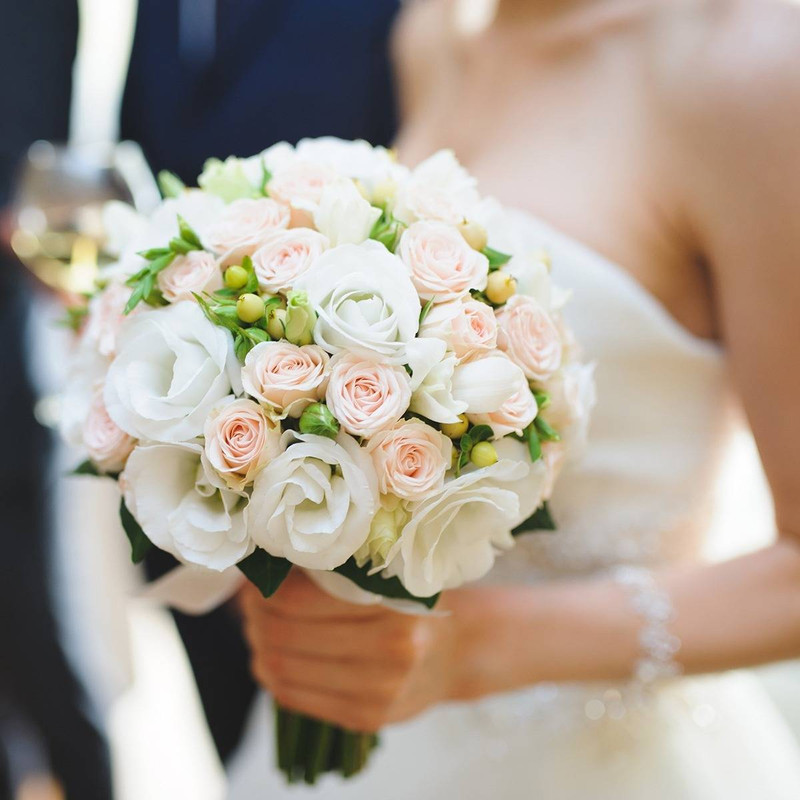
Far from the unnaturally glowing shades of their early days, you can find artificial flowers today that are highly realistic. Dahlias, tulips, hydrangea, lavender, baby’s breath, ranunculus and peony are among the varieties that can be faked quite successfully.
Even better, artificial flowers are very photogenic! Newlyweds who chose silk flowers often say they were happily surprised at how well their fake wedding flowers looked in photos.

Types of Artificial Flowers
Artificial flowers are made from a variety of materials, from traditional silk and polyester to paper, wood and foam. Each type has specific advantages and disadvantages.
Silk Flowers
The term “silk” flower can be misleading. Although most artificial flowers are made from polyester fabric, not silk, the name persists. Silk flowers vary widely in price and quality. Look for supple materials, realistic finishes and details, sturdy construction and natural colors.
Pros: Realistic appearance (especially high-quality varieties), widely available, reusable
Cons: Some can appear stiff or shiny under certain lighting; less eco-friendly due to synthetic materials
Polymer Flowers
Flowers made from polymer latex, polyurethane or silicone have an exceptionally realistic look and feel. However, they are also the most expensive variety of artificial flowers and may even surpass fresh flowers in price.
Pros: Incredibly lifelike look and touch; durable
Cons: Typically more expensive; limited DIY availability
Foam Flowers
Thin, petal-shaped pieces of foam are glued together for a reasonably realistic and cost-effective faux flower.
Pros: Budget-friendly, soft texture, lightweight.
Cons: Less realistic up close; can deform in heat or humidity.
Wax-Coated Flowers
In your search for wedding bouquets, you may find references to wax-coated flowers. You can view many tutorials on YouTube to learn more about the process.
Waxing can make silk flowers look and feel more realistic. Some people also dip their fresh flowers in melted paraffin or soy wax to preserve them. Waxed flowers are quite susceptible to heat, making them a chancy option for a summer outdoor wedding. However, in a cool room, waxed fresh flowers can last several months.
Coating silk flowers with wax is a time-consuming extra step that will add to the overall cost. As a method for preserving flowers after your wedding, wax coating isn’t as long-term a solution as other methods, like drying. Unlike drying, however, it preserves the garden-fresh look of your blooms.
Pros: Elegant appearance; can preserve real blooms
Cons: Fragile; may melt in high temperatures
Wooden Flowers
Wood flowers have recently surfaced as a choice for wedding florals. Another primarily do-it-yourself option, wooden flowers are quite affordable. They are easy to dye, with color options to perfectly match your theme.
Wood flowers mainly mimic lush varieties, like roses, ranunculus and carnations.
Pros:
Very cost-effective
Adaptable to all color schemes
Unique texture, biodegradable, customizable
Cons:
More delicate than synthetic faux flowers
Appearances range from rustic to fairly realistic; may not suit all themes

Choosing Your Flowers
A wedding is one of the most significant of all the events when one might give, receive or display flowers, emphasizing the importance of the occasion. Flowers set the tone for your wedding and illustrate your aesthetic, whether it’s casual or formal, restrained or romantic, simple or lavish.
While budget is a major consideration when choosing wedding flowers, it isn’t the only factor in your decision. After all, flowers play a major role in creating a setting as beautiful and special as the day itself.
As you explore the choice of fresh vs. faux wedding flowers, keep these additional points in mind:
The mood you want to set
Your style and preferences
Wedding theme or color scheme
Your favorite or desired flowers
Scope of floral decor
Seasonal availability
Access to a floral professional
Your willingness to create your own arrangements
Whether you choose real flowers or fake flowers that look real, educating yourself about the various floral options available, determining your priorities and weighing your preferences will help you reach a decision and achieve the magical, flower-festooned wedding day you’ve envisioned.
Browse our quality artificial florals and beautiful array of ribbons to begin your floral wedding journey.
Get updates on the latest sales and featured items by subscribing to our newsletter below. New subscribers receive 10% off their first order!
Need help with decorating tips? Choosing the right tree?
Christmas Central Resources