






Top 10 Must-Know Pool Safety Tips for Every Family
Jun 6th 2025

School’s out and your kids are ready to jump into the pool! As a family with a swimming pool, you no doubt already have set some pool rules. Whether or not this is your kids’ first swim season, it’s important to review those rules and post them near your swimming pool to remind young swimmers.
Every summer, U.S. hospitals treat thousands of kids for pool-related injuries. According to SafeHome, between June and August 2023, swimming-related injuries caused 21,613 Emergency Department visits among children aged 3 to 10 and 15,157 visits among youth aged 11 to 17.

Swimming Pool Rules
Warn your children never to go into the pool alone. That’s a good rule for adults, too!
Adult supervision is essential. Have two or more watchful adults keeping an eye on kids whenever they’re in or near the water.
Wet surfaces around swimming pools can be slippery, so don’t let kids run around the pool. Remind them to walk and to watch where they are going to avoid bumps, scrapes, slips and more serious injuries.
No diving headfirst, especially in shallow water. Diving accidents account for numerous drownings and paralysis injuries each year.
No roughhousing in or around the pool. That means no pushing, shoving, dunking or horseplay.
Broken glass and bare feet are a dangerous combination. Never use drinking glasses or glass containers around the pool. Instead, use plastic or other non-breakable containers.
Eating or chewing gum in the pool is a potential choking hazard. Serve snacks and drinks a safe distance from the pool and make sure children have chewed and swallowed before heading back into the water.
Do not use electric appliances like radios, lights or fans near the pool.
Get out of the water in bad weather. In case of lightning, thunderstorms or other severe weather, clear the pool area and go indoors.
Discourage breath-holding games. Children often challenge each other to see who can hold their breath underwater the longest. However, prolonged breath-holding can be deadly, notes the Centers for Disease Control. Bystanders may think the child is “playing the game” when they are in danger of drowning.

Take Proper Safety Precautions
All children should know how to swim, especially if you have a pool or visit one regularly. Swimming is a life skill that can significantly reduce a child’s chances of drowning. Check with your school district or local YMCA to find swim classes near you.
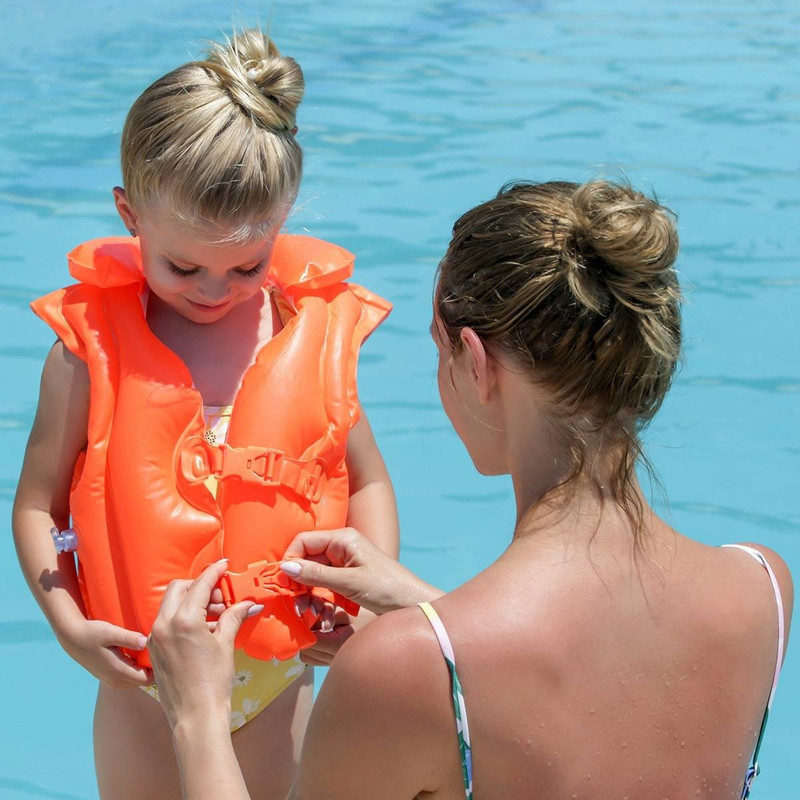
Young swimmers should wear swim vests and arm floats and use them correctly. Have swim boards, floating toys and pool noodles available as extra support for inexperienced swimmers. Be prepared for emergencies with poles, rings and other safety equipment.
Follow the 25-10 rule. Swim experts suggest that if a child can't swim 25 meters (the length of most pools) without stopping, a parent should remain within 10 feet of them. Preferably, the parent should be in the water with the child.
Pool owners – or people who spend time around a pool – should learn basic first aid, including CPR (cardiopulmonary resuscitation), in case of emergencies. First aid courses are available through the Red Cross and other community organizations.
Post your pool rules in a conspicuous spot for all swimmers, including guests. Teach children to respect and follow any posted rules at the pool.
These pool safety tips are not exhaustive. Kids can be inventive, so there’s a good chance you might have to add swimming pool safety rules that are specific to your family.
Focus on pool safety and follow sensible pool safety rules to enjoy a fun and safe swim season!
Make your pool time even more fun! Browse our wide selection of learn to swim aids, pool safety equipment, pool floats, water toys and games.

Get updates on the latest sales and featured items by subscribing to our newsletter below. New subscribers receive 10% off their first order!

Need help with decorating tips? Choosing the right tree?
Christmas Central Resources